Multifocal is a customized glasses with progressive power that allows you to see clearly at all distances. Multifocal lenses offer a gradual transition between multiple corrections without the need for switching glasses. Correcting nearsightedness, farsightedness, intermediate vision and astigmatism, all at once.
Multifocal Functions & Features
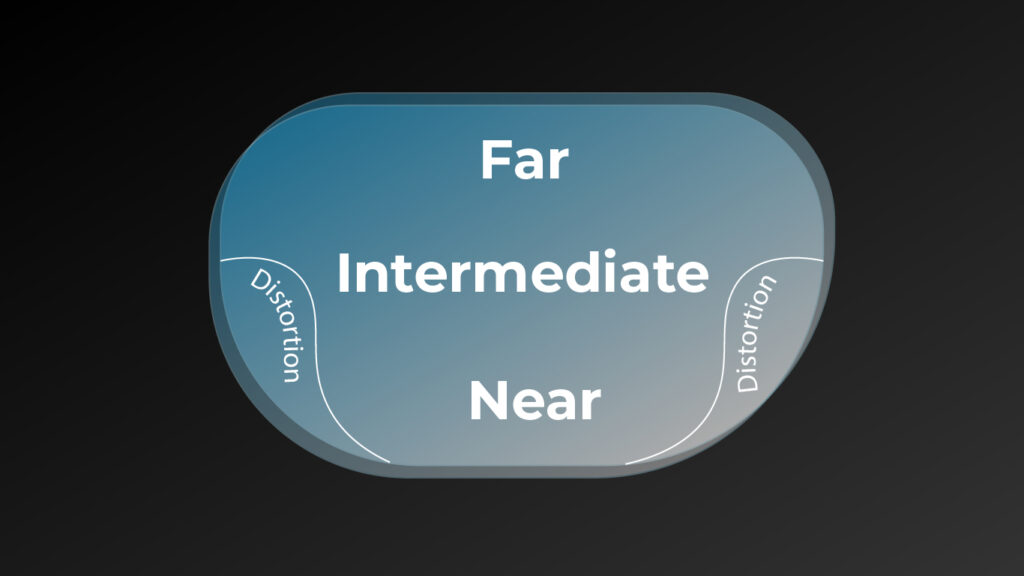
Multifocal glasses have multiple focusing powers, which provide convenience to see clearly at varying distances with fewer distortions on the sides.
One Pair For All Distances
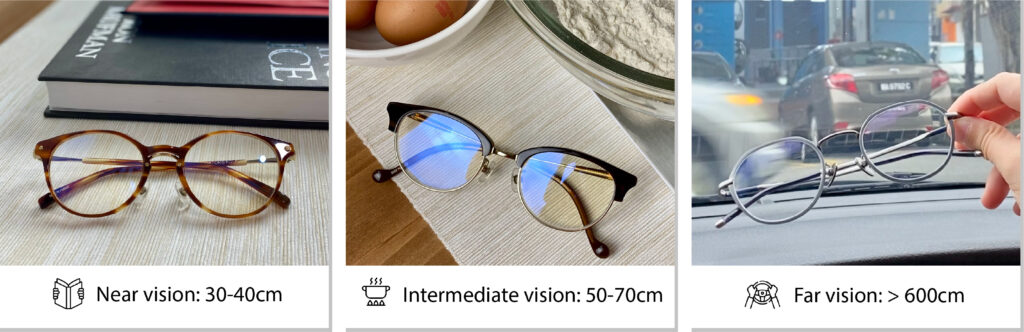
In a pair of multifocal glasses, you can see clearly with :
Near vision – closed up objects, reading, eating (e.g. removing fish bones)
Intermediate vision – digital devices, cooking
Far vision – driving, watching TV
Who Uses Multifocal?
Multifocal lenses are usually for individuals in the 40s and above who have presbyopia (Malay: rabun tua; Mandarin: 老花).
Presbyopia is an eye condition that affects the vision during the natural ageing process. It usually becomes noticeable in the early to mid-40s. Objects nearby look blurry, as the lens in the eye gets harder and less flexible to focus light correctly on the retina.
Some common symptoms of presbyopia:
struggle to see food labels at supermarket
enlarge phone’s font size to read messages
hold reading materials further away
Many have other refractive errors, such as shortsightedness and astigmatism, in addition to presbyopia. Multifocal lenses provide solutions to all these eye conditions.
One pair for all solutions!
Pros & Cons Of Multifocal
Pros
One pair for all distances, no need to swap glasses for near work (e.g. reading) and far vision (e.g. driving).
Seamless power transitions between near, intermediate and far vision.
Can be personalised with individual reading behaviours to give a more natural vision.
Cons
Usually more expensive due its advance technology and lens designs.
Some users find it hard to adapt when switching from single vision or bifocal glasses to multifocal glasses.
Ways To Adapting Multifocal Glasses
Look straight up when walking, don’t look at your feet.
To look at reading materials, lower your eyes so that you’re reading from the lowest part of your lenses.
Wear your glasses consistently for the first few weeks (1-2 weeks) for your eyes to get used to them.
Put your glasses on in the beginning of the day to ease the adaptation to new glasses (don’t switch them up with your old glasses in between, if any).
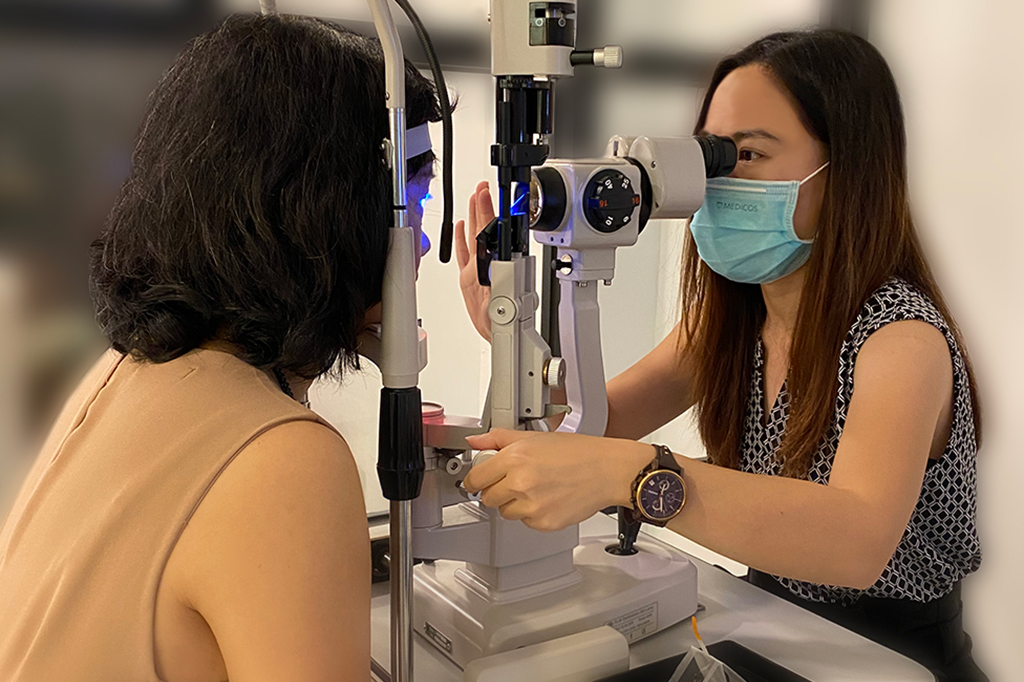
Not sure if multifocal glasses are for you? Visit us at Rx Optometry today to get a comprehensive eye examination and our optometrists will help you decide.
Make an appointment online with promo code: MULTI100 to get RM100 off on your multifocal glasses.